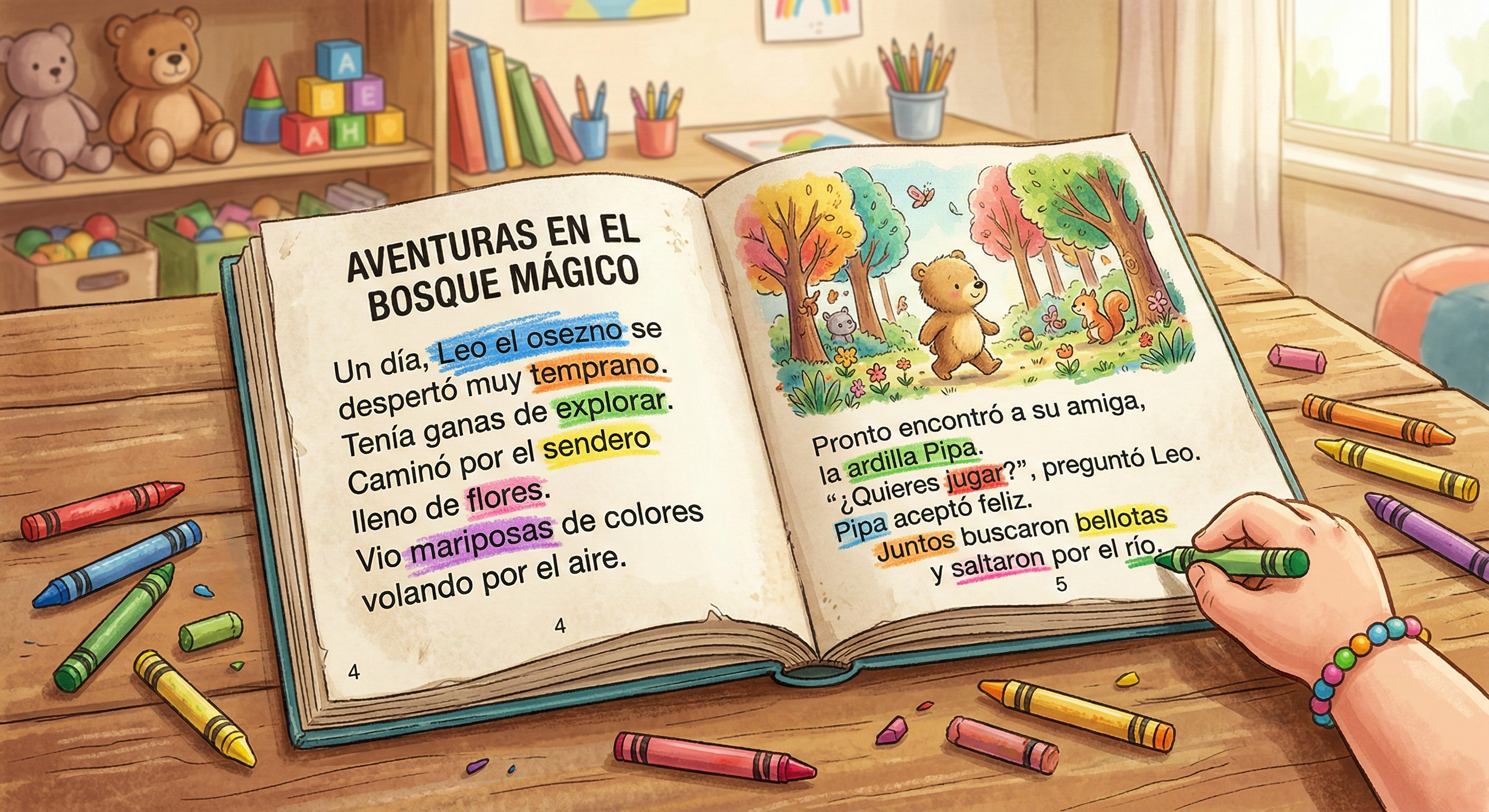
If you've ever spent hours filling pages with colored highlighters only to forget everything precisely 24 hours after the exam, you've been a victim of the 'illusion of competence.' Modern cognitive science has shown that passive study is the most inefficient way to learn.
The big mistake of traditional education is confusing familiarity with knowledge. By reading a text over and over, your brain gets used to the words and 'believes' it knows them, but it isn't creating strong neural connections. True learning occurs only through retrieval effort.
Active Recall consists of forcing the brain to generate a response from within, rather than simply recognizing external information. It's like a gym workout for neurons: without effort and resistance, the mental muscle of memory doesn't grow.
This process is exponentially enhanced when combined with Spaced Repetition. Instead of cramming info into a single session, the brain needs encounters with the data at increasingly longer intervals. It's the only way to move knowledge from fragile short-term memory to robust long-term memory.
The biology of memory is implacable: what isn't used, the brain discards to save energy. By forcing recall just when we are about to forget, we send a clear biological signal: 'this information is vital for survival.' Only then does the brain invest energy in recording it permanently.
"Under ordinary circumstances, frequent repetitions are indispensable in order to make possible the reproduction of a given content.
The Science of Digital Flashcards
Using memory cards isn't child's play; it's neural engineering. By presenting a concept and asking you to recall it before showing the solution, we are forcing the brain to search its biological 'hard drive,' strengthening the path to that specific data. In digital environments, this is optimized through algorithms that detect which words cost you more to show them with the exact frequency needed. You don't waste time reviewing what you already know, concentrating your cognitive energy where significant and lasting learning progress actually occurs.
The Desirable Difficulty Effect
Contrary to popular belief, if an exercise seems 'too easy,' you probably aren't learning anything. Studies show that the effort to recall improves long-term retention. Feeling like it's hard to remember a word is the physical sign that your brain is restructuring its connections. This 'desirable difficulty' turns study into a dynamic process. By facing linguistic challenges at the right time, you are maximizing your neuroplasticity. The brain adapts to the challenge, becoming more agile and able to retrieve information instantly in real-life situations.
Fighting the Forgetting Curve
Hermann Ebbinghaus discovered that we forget 70% of what we learn in less than 24 hours if there is no review. Active Recall interrupts this tailspin. Every time you retrieve a piece of data, the curve becomes flatter, meaning the information will take much longer to fade next time. It's a fight against biological time. Through strategic use of intervals, we can guarantee that vocabulary and grammatical structures become part of your linguistic intuition. It's not about studying more hours, but about studying at the key moments where the brain is most receptive to memory reinforcement.
At Slimes, we have eradicated passive study. Everything in our world, from dialogues with NPCs to spell battles, is designed as a constant Active Recall exercise, ensuring every minute of play translates into an indelible linguistic memory.