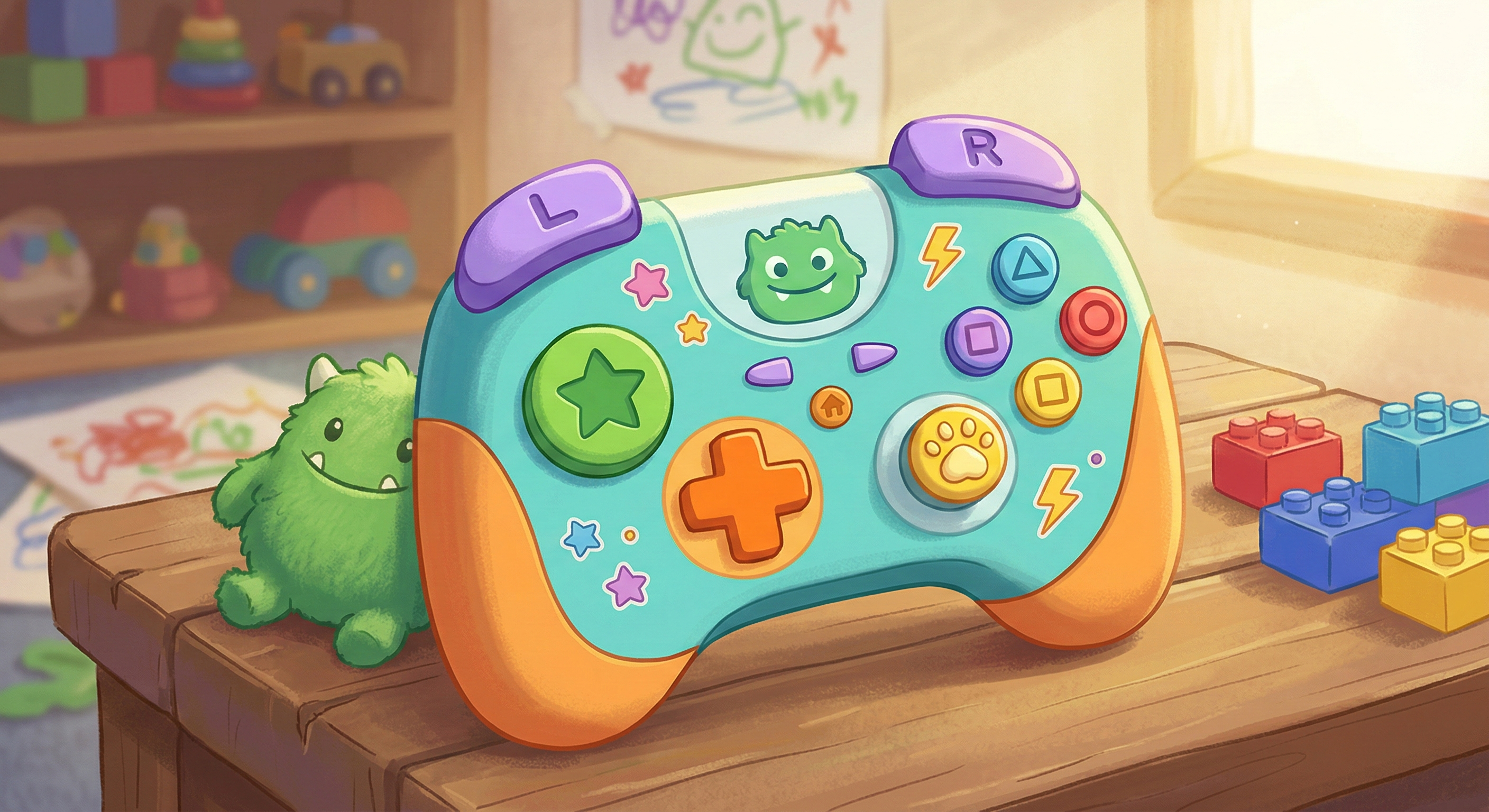
For decades, video games in the classroom were seen as rewards for finishing 'real work.' However, integrating game mechanics is a paradigm shift backed by neurology: Game-Based Learning (GBL) is the future of cognitive development.
The big difference lies in intrinsic learning. While traditional gamification only adds shallow layers (points for boring tasks), GBL makes learning and play one. Educational content is tied to mechanics so students understand complex concepts through direct action in virtual worlds.
The biological secret is dopamine. When a player overcomes a complex challenge or receives an unexpected reward, the brain releases this neurotransmitter, which acts as 'glue' for memory. Moreover, playing physically alters brain structure, improving visual attention and decision-making under pressure.
A key concept in quality design is avoiding 'Chocolate-covered Broccoli.' Digital natives instantly detect when someone tries to hide a repetitive exam under shiny graphics. For it to work, the act of playing must be the learning mechanism itself, eliminating the rejection built by outdated educational systems.
Finally, good games normalize and celebrate failure. Just as in complex simulators, something going wrong is part of the fun. This 'productive failure' teaches resilience: error stops being a final judgment of intelligence and becomes a necessary step to iterate and improve autonomously.
"In play, the child is always a head taller than himself.
Enhanced Working Memory
Action and strategy games force the brain to manage multiple variables in real-time, from resource management to immediate tactical reaction. This constant exercise strengthens neural networks associated with accelerated logical reasoning and long-term planning. By keeping working memory under a positive stimulus, the student develops the ability to process a larger volume of information without reaching cognitive exhaustion. It is high-performance training for executive functions that transfer directly to any other academic discipline.
Reduced Anxiety
By removing the fear of punishment typical of traditional systems, students dare to experiment and think creatively. This drop in the 'affective filter' allows information to flow without the psychological barriers generated by the stress of being evaluated. A brain relaxed and focused on play is much more permeable to new concepts. The security that error is part of the path triggers natural neuroplasticity, allowing knowledge to settle much more organically and lastingly than through anxiety-forced memorization.
Ethical Flow and Adaptability
The integration of Generative AI allows the challenge to be perfect for every level, ensuring learning happens almost invisibly and without the friction of boredom. It is the democratization of learning: each child moves at their own ideal pace without feeling compared. This adaptability ensures the student remains in the sweet spot of maximum concentration. By eliminating peaks of extreme frustration or the tedium of unnecessary repetition, we ensure that human curiosity is what guides the entire educational process.
Our GBL architecture in Slimes is built to achieve a neurological 'Flow State.' By balancing challenge with student skill via AI, achievement-driven dopamine becomes the glue that fixes language forever.